

Balaji Muralidharan
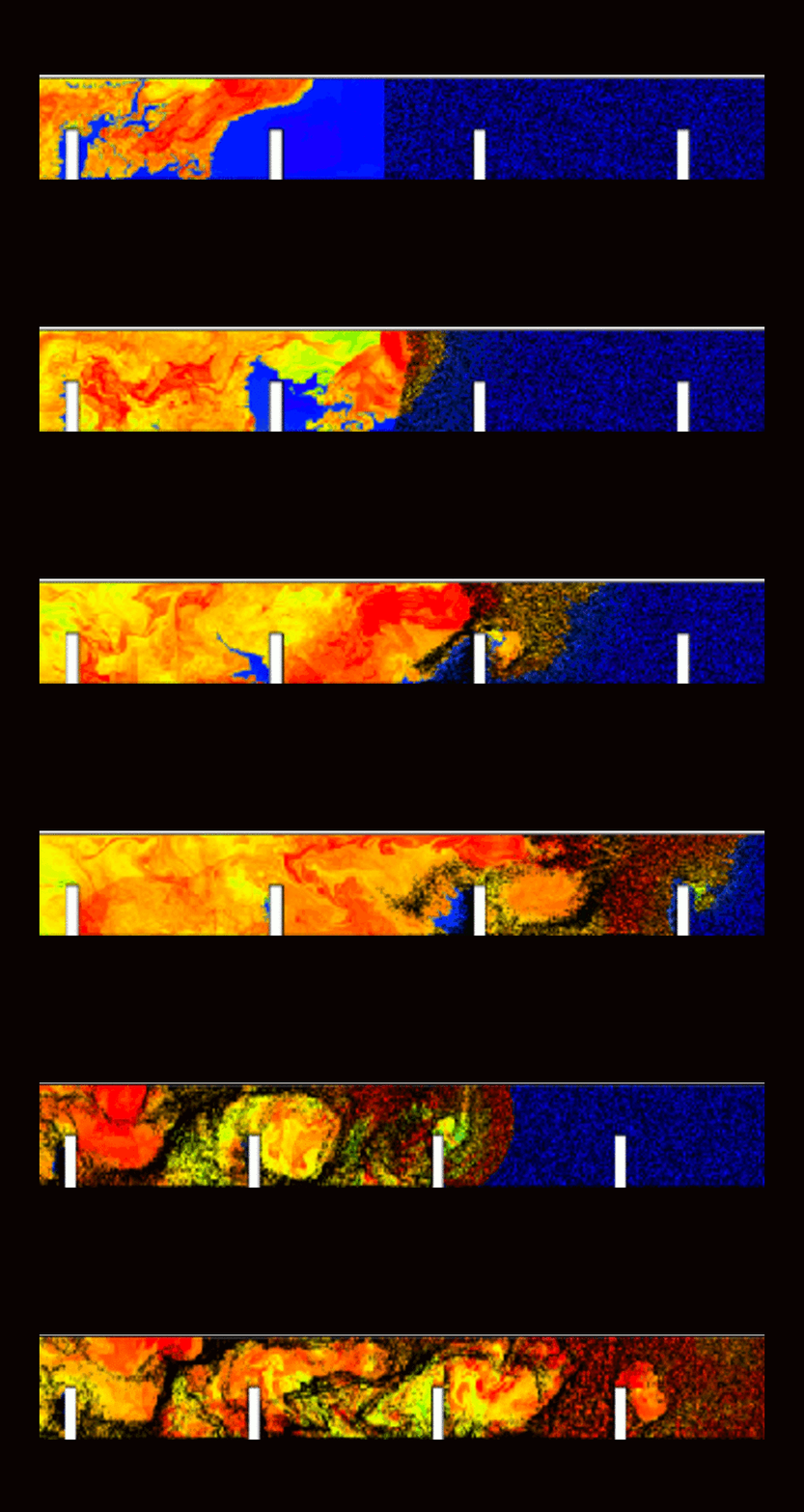
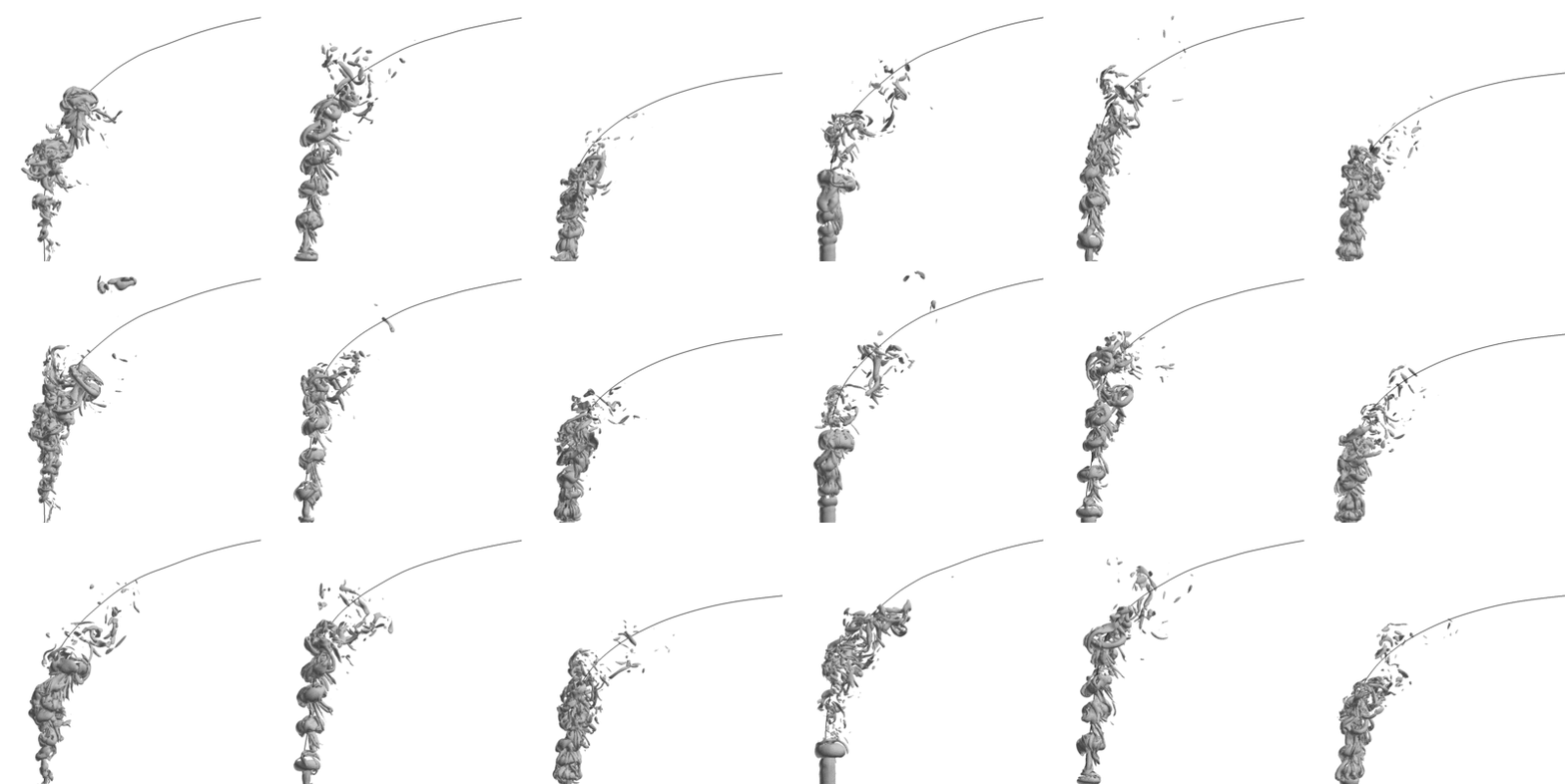
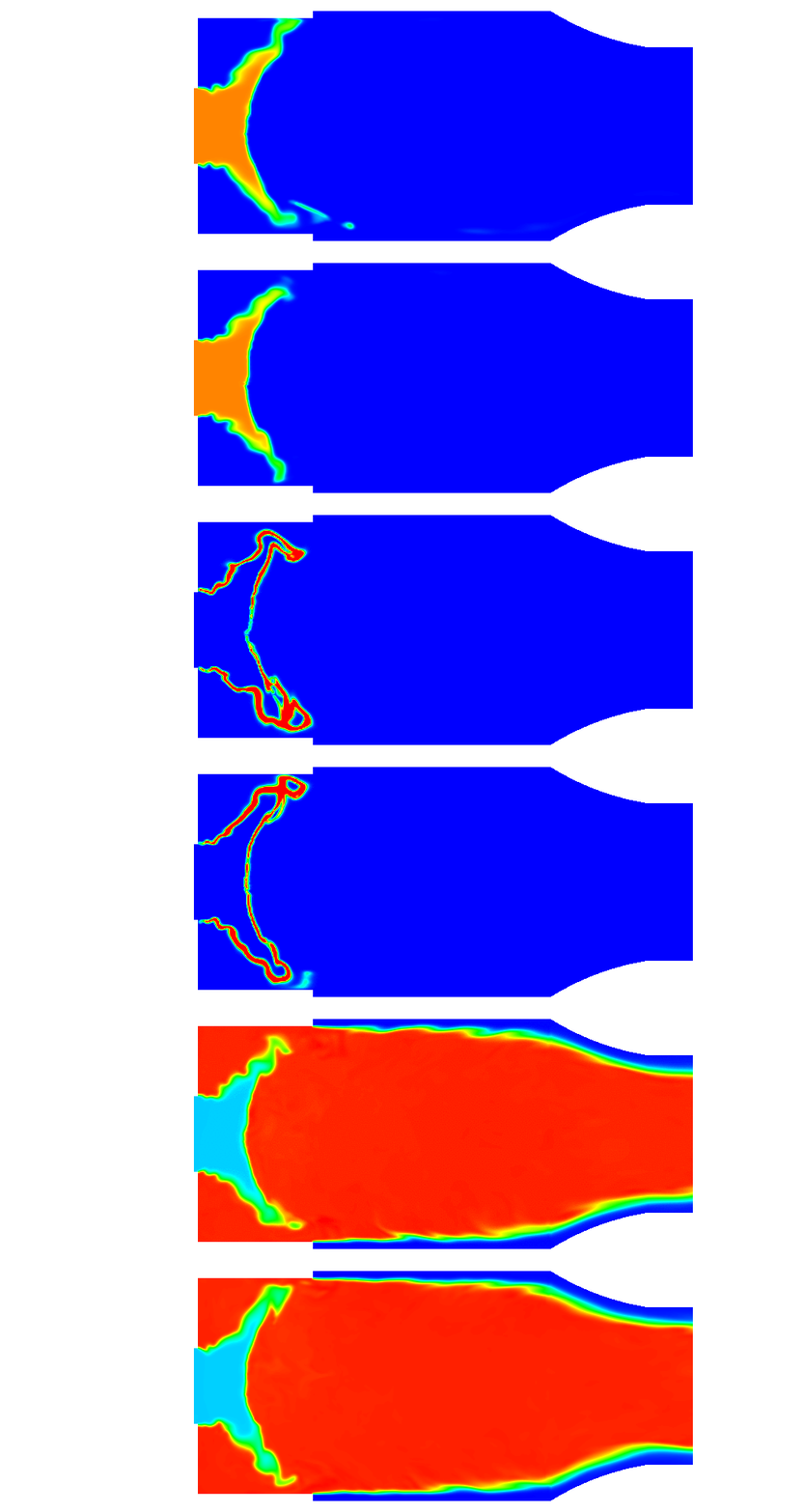
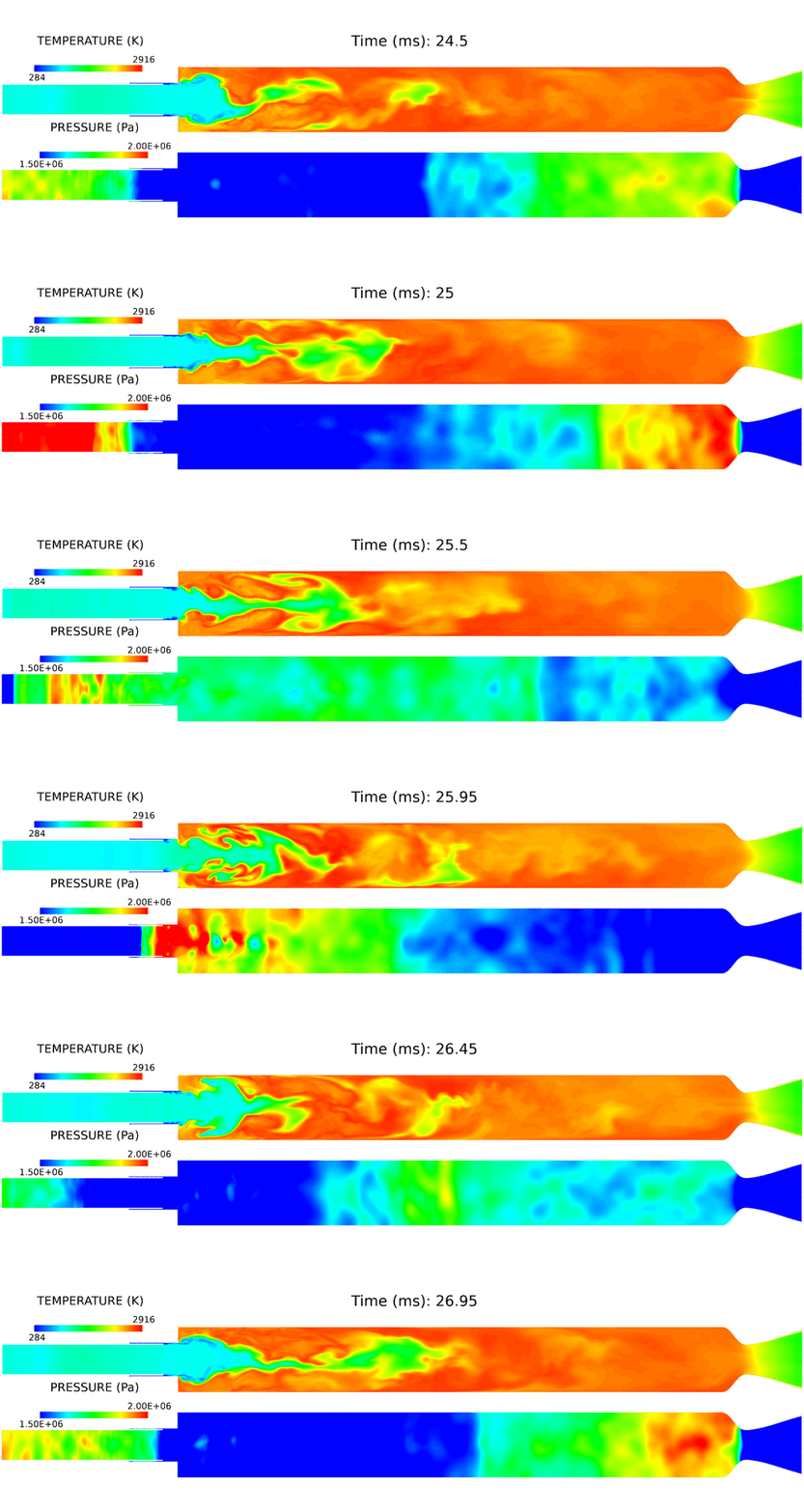
Interaction of moving structures with unsteady shock fronts and detonations in gaseous mixtures is of interest in many applications such as ram accelerators and other hypersonic propulsion systems. A numerical framework for simulating such problems involving coupling of high speed reactive fluid flow to the motion of structural boundaries or embedded bodies has therefore been developed. Block structured Adaptive Mesh Refinement (AMR) is performed to capture fine scale flow and surface features, while cutcell based immersed boundary method is employed to resolve moving boundaries. A levelset formulation is used for implicitly tracking moving interfaces. The motion of the interface may be specified by a predetermined function of time or coupled to the flow solution such as the motion of a rigid body subjected to surface stresses exerted by the flow around it. High-Order Upstream Central (HOUC) scheme for spatial discretization and Strong Stability Preserving Runge-Kutta scheme (SSP-RKE3) for time integration of the levelset field is employed resulting in a third accurate approach. As an application study, response of an energetic flow to impulsive motion of a rigid body was investigated. Simplified single step chemistry with Arrhenius kinetics is used to model detonation structure. All the critical temporal phenomena for establishment of a detonation front such as formation of high pressure reaction zone and its coupling with the shock front were accurately captured. The characteristics of the cylinderically diverging detonation front was found to match qualitatively with experimental observations.