

Research Projects:
- Simulation of Condensation and Ice Nucleation in the Engine Exhaust Plume:
- Hydrogen Exhaust Modelling Project:
- Characterization of Turbulent Premixed Flames in the Broken/Distributed Reaction Zone Regimes:
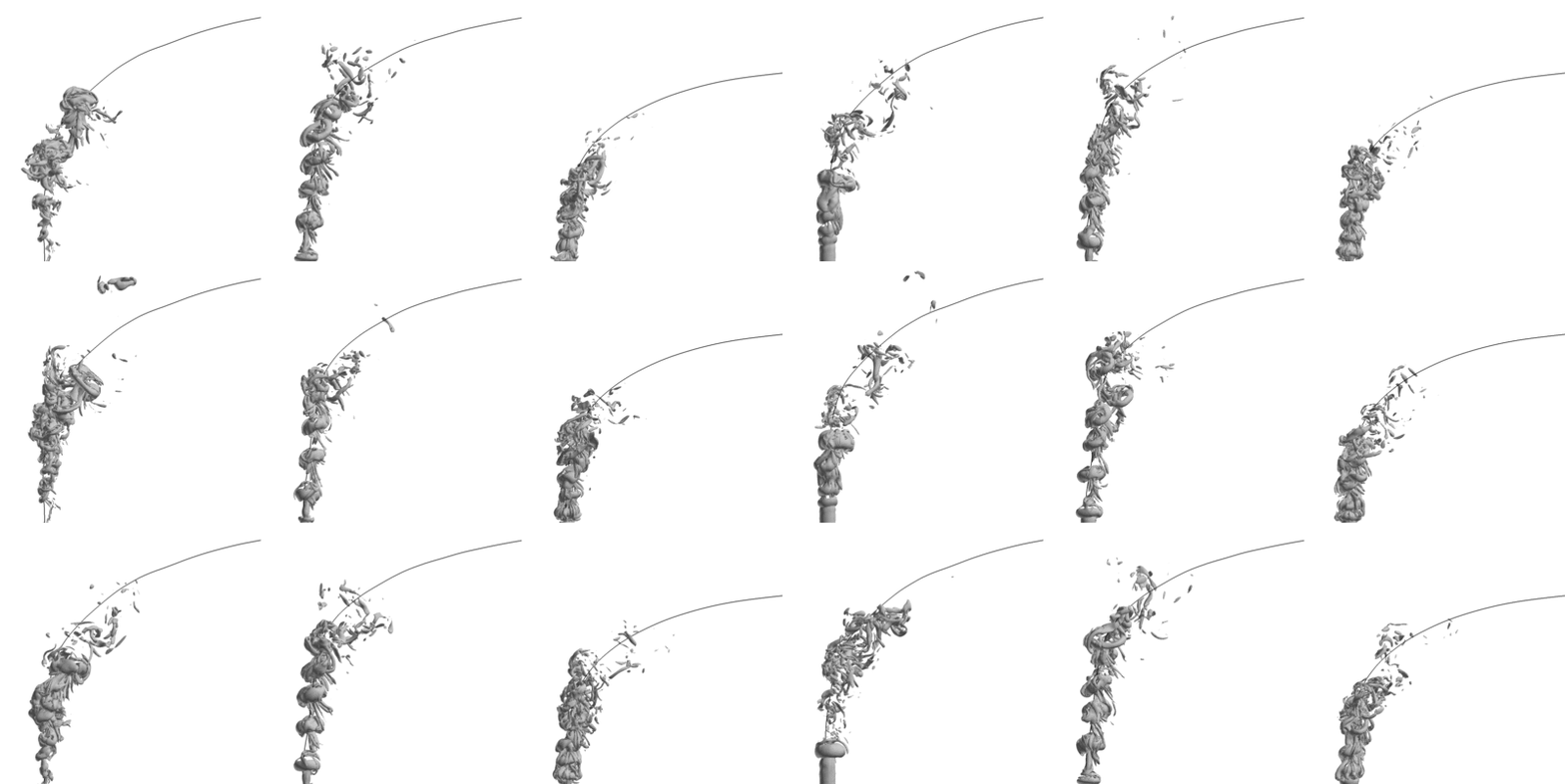
Condensation trails, or contrails, are observed within the first kilometer of aircraft-exhaust. Contrails can result in the formation of Cirrus clouds having a tendency to alter the radiation budget (radiation transmitted from outer-space relative to that reflected back). This has repercussions towards climate change. It is known that the composition of the aircraft exhaust can significantly influence the formation of contrails as much as the flight-conditions themselves. For instance, at cruise-altitudes (approx. 40,000 ft) the thermodynamic conditions are not met for homogeneous nucleation (pure-droplet freezing) and presence of suitable ice-nucleus is essential for ice-formation via the heterogeneous freezing mode (freezing over surfaces). Soot present in aircraft exhaust acts as ice-nucleus, but is inherently hydrophobic. As a result, for soot to be receptive to condensation, and subsequently, freezing, needs to be treated in a process called "activation". Activation of soot is achieved in the exhaust plume via the presence of exhaust-gases such as NOx, SOx. Recent thrust in the aviation industry towards investigations of low-sulfur fuels is therefore motivated by the goal of prevention of heterogeneous freezing at later plume-ages. Our investigation focuses on the development of a zero-dimensional solver for tracking the formation of ice particles. In this approach a distribution of soot-particles is tracked along a plume-streamline using a nodal-sectional-approach for gleaning size-resolved information about soot-composition at different plume-ages. These streamlines are either computed from turbulent jet scaling relations are from full 3D LES simulations of an aircraft. Sensitivity to contrail formation is then studied by parameterizing the aircraft exhaust conditions vis-a'-vis relative humidity, chemical composition, soot-size distribution, radial location in the exhaust plane and various freezing/nucleation models. The information gathered from these studies include the axial locations at which ice particles are formed and the microphysical pathways by which they are created. The 0D solver can therefore be used as a tool to define a parameter-map for optimum combustor conditions with the aim of reducing contrail formation.
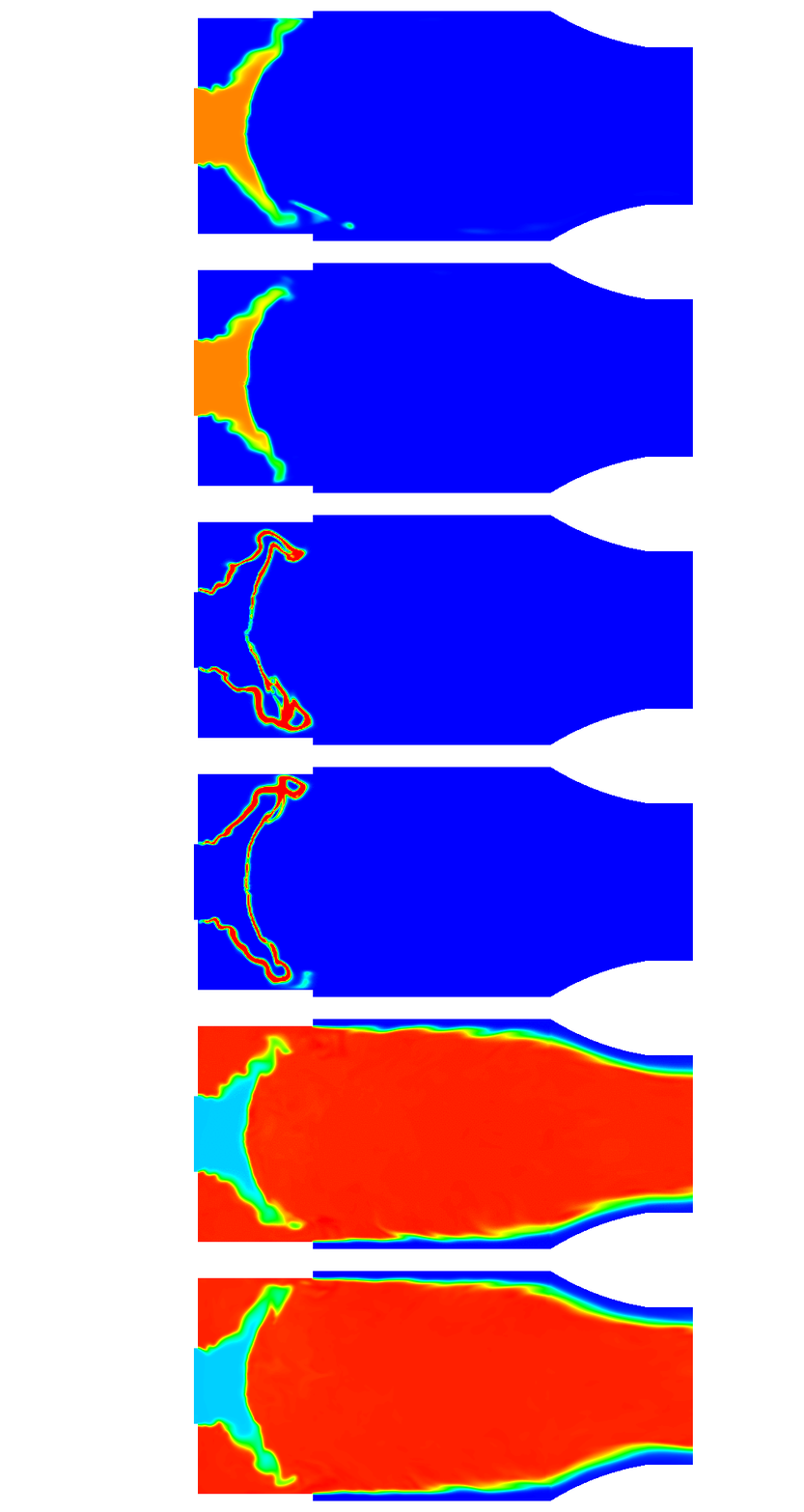
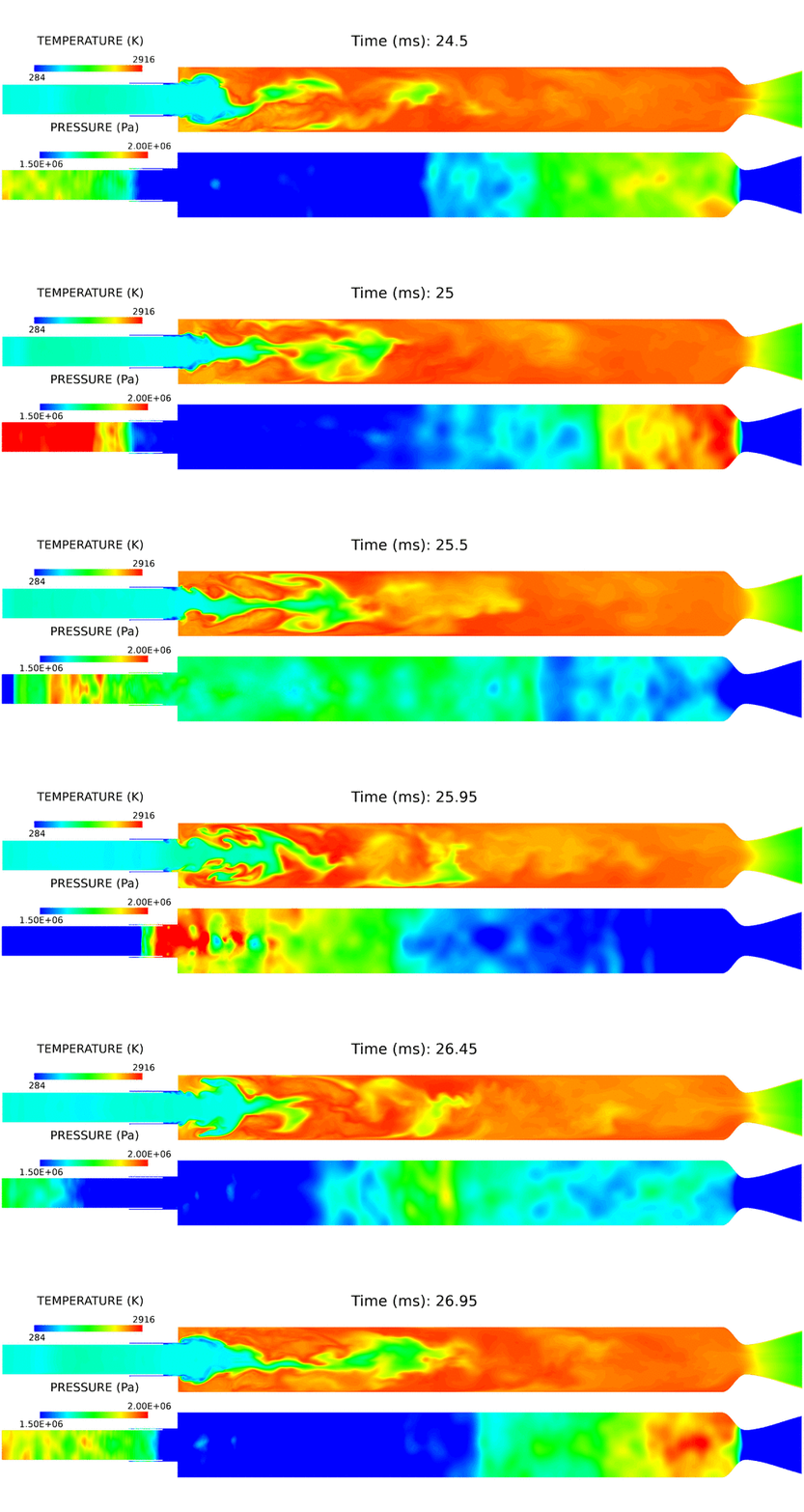
Flame out scenarios in Hydrogen based Gas turbine engines are associated with concomitant operational safety issues. Undetected flame-outs can result in excessive injection of hydrogen resulting in conditions close to the lean explosive limit (LEL) of hydrogen. It is important to ensure that the fuel mixture, if above LEL does not detonate. This LES investigation models the downstream region of a gas turbine engine for a range of mixture compositions and exhaust temperatures. The geometry, currently in design stage, essentially consists of a rectangular duct of varying cross-section terminating into the ambient atmosphere via a vertical cylindrical duct. The mixture composition ranges from 8%-12% of H2 by volume of mixture and the temperature ranges from 600 K - 800 K. Effect of geometry on flame-propagation, such as the cross-sectional area and the obstacles in the form of an MxN array of rod and tube bundles comprising the heat-exchanger unit is studied. The effect of ignition location on flame-propagation is also investigated. The LES results are expected to guide the design of the downstream duct via suggestions of safe operating envelopes (mixture composition and temperature) as well as instrumentation locations for the early detection of local wall pressure exceeding a predefined threshold to ensure safe shutoff of fuel injection.
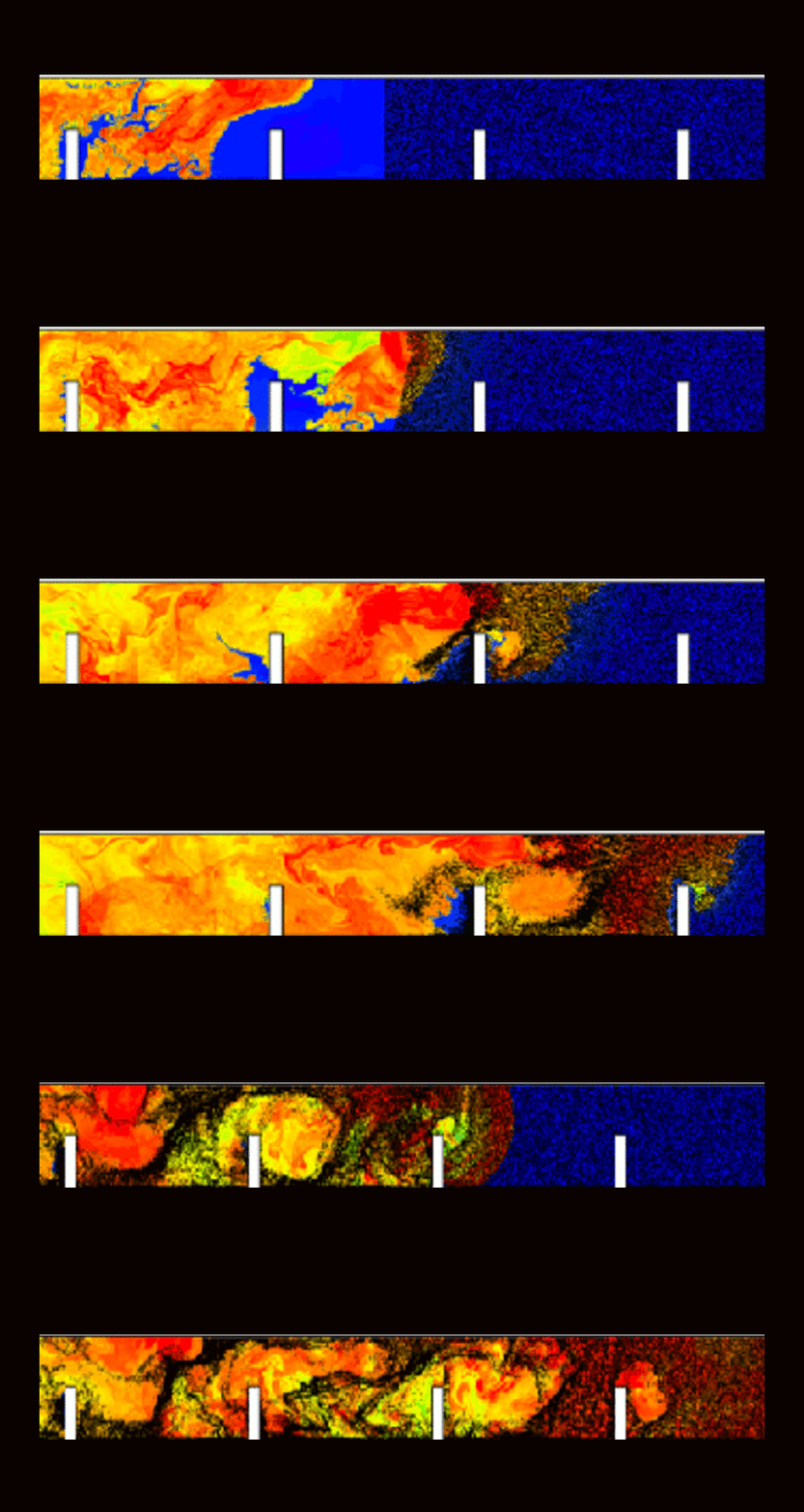
Turbulent premixed flames exhibit different structure and propagation characteristics with increasing upstream turbulence intensity starting from thin wrinkled flames in the Corrugated Flamelet regimes to a thicker flame in the Thin Reaction Zone Regime (TRZ) and finally, becoming more disorganized or broken in the Broken or Distributed Reaction Zone (B/DRZ) regimes under intense turbulence. A single comprehensive predictive model that can span all the regimes does not currently exist, and in this study we explore the ability of the linear-eddy mixing (LEM) model to capture the physics in all these regimes. Past successful predictions in the flamelet and TRZ regimes are revisited with specific focus on new experiments in the TRZ regime, and new simulations in the B/DRZ regimes are performed to qualitatively compare results from recent DNS literature. Both timeaveraged and instantaneous distributions of temperature and reaction thickness are compared with available experimental data for the TRZ regime and found to be in satisfactory agreement. Varying levels of preheat zone broadening is seen in all the
TRZ cases. Additionally, near the B/DRZ regime it is shown that under intense turbulence conditions, turbulent diffusion dominates over preferential diffusion effects leading to flame-quenching at large Ka for specific numerical configurations.