

Research Projects:
- Modelling Unsteady Shocks and Detonation Interactions with Hypervelocity Moving Bodies:
- Modelling Jet In Cross-Flow (REJICF) with Adaptive Mesh Refinement (AMR):
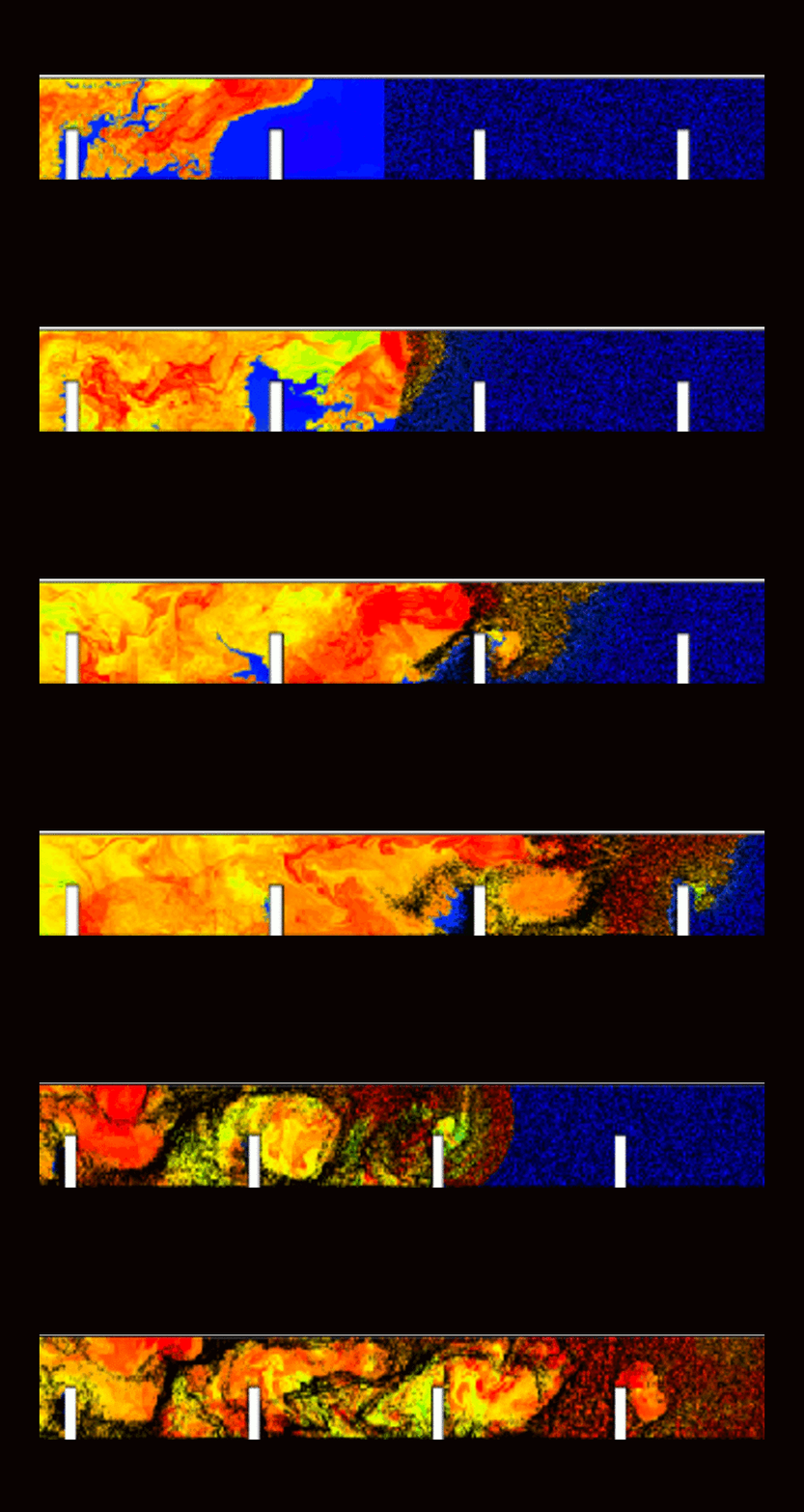
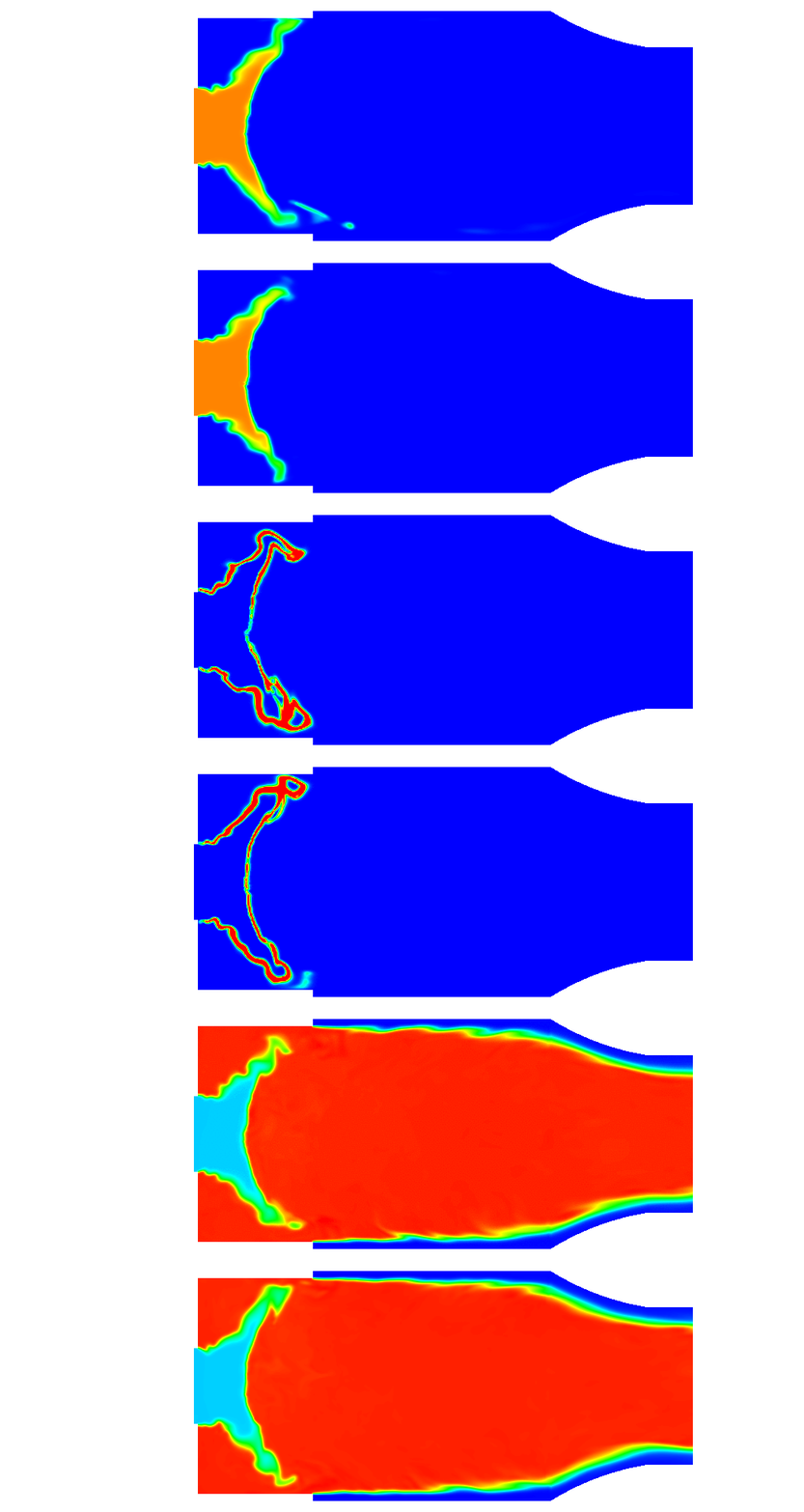
Interaction of moving structures with unsteady shock fronts and detonations in gaseous mixtures is of interest in many applications such as ram accelerators and other hypersonic propulsion systems. A numerical framework for simulating such problems involving coupling of high speed reactive fluid flow to the motion of structural boundaries or embedded bodies has therefore been developed. Block structured Adaptive Mesh Refinement (AMR) is performed to capture fine scale flow and surface features, while cutcell based immersed boundary method is employed to resolve moving boundaries. A levelset formulation is used for implicitly tracking moving interfaces. The motion of the interface may be specified by a predetermined function of time or coupled to the flow solution such as the motion of a rigid body subjected to surface stresses exerted by the flow around it. High-Order Upstream Central (HOUC) scheme for spatial discretization and Strong Stability Preserving Runge-Kutta scheme (SSP-RKE3) for time integration of the levelset field is employed resulting in a third accurate approach. As an application study, response of an energetic flow to impulsive motion of a rigid body was investigated. Simplified single step chemistry with Arrhenius kinetics is used to model detonation structure. All the critical temporal phenomena for establishment of a detonation front such as formation of high pressure reaction zone and its coupling with the shock front were accurately captured. The characteristics of the cylinderically diverging detonation front was found to match qualitatively with experimental observations.
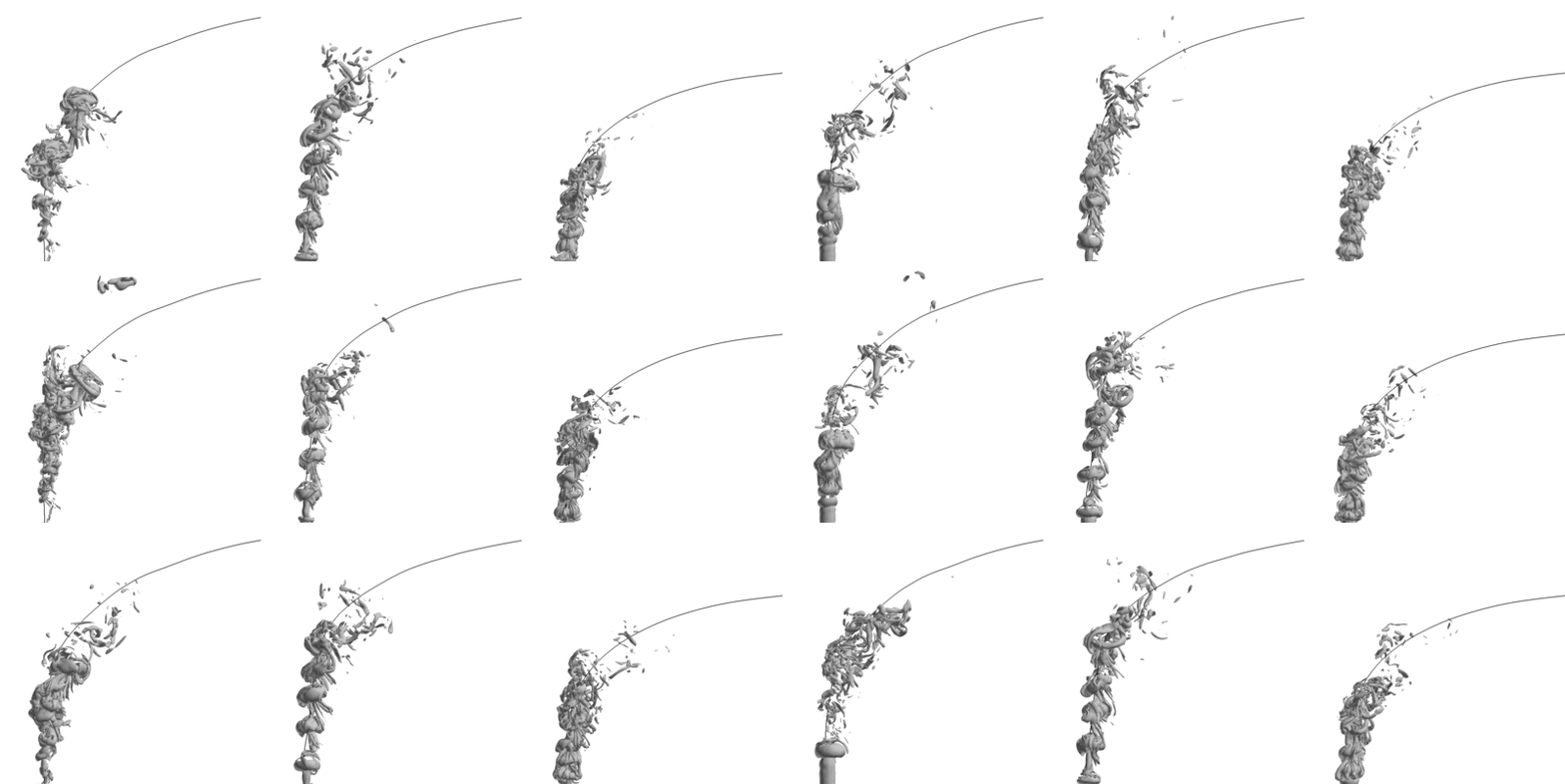
A three-dimensional Large Eddy Simulation (LES) of a H2-N2 jet penetrating into a cross flow of heated air under atmospheric conditions without reactions is performed. Such transverse JICF configurations are used in many practical applications such as fuel injection nozzles and dilution holes in gas turbine combustors to achieve high mixing between the jet and the cross flow. Typical of JICF flows are the interaction of the boundary flow and jet issuing from a nozzle. The interaction results in a complex, unsteady flow field with a multitude of length scales. Numerical solution to the JICF problem thus requires resolving all the relevant time and length scales associated. Due to the high Reynolds number nature of the JICF configuration, the cost of employing a fine numerical grid turns to be prohibitive. Block structured Adaptive Mesh Refinement (AMR) is therefore employed to resolve fine scale flow features only in regions of interest and thus reduce the computational cost of simulating the problem to manageable levels. A new heuristic criteria based on resolved level of turbulence and density gradients is used to determine regions where refinement is required. Results of the non-reacting studies indicate that the AMR is very effective in capturing all the unsteady flow features well known from the literature for a JICF configuration. Future goals include reacting flow studies of the same configuration using a mixture fraction based approach. Subgrid combustion closures for LES, coupling the laminar flamelet model with Linear Eddy Model (LEM) would also be developed as a part of the future effort.
Publications:
Conference without proceedings:
1. Muralidharan, B. & Menon, S. 2013 Simulations of Unsteady Shocks and Detonation
Interactions with Structures. 49th AIAA/ASME/SAE/ASEE Joint Propulsion Conference, San Jose.