

Research Projects:
- Lean-Direct Injection (LDI) Combustor Simulation:
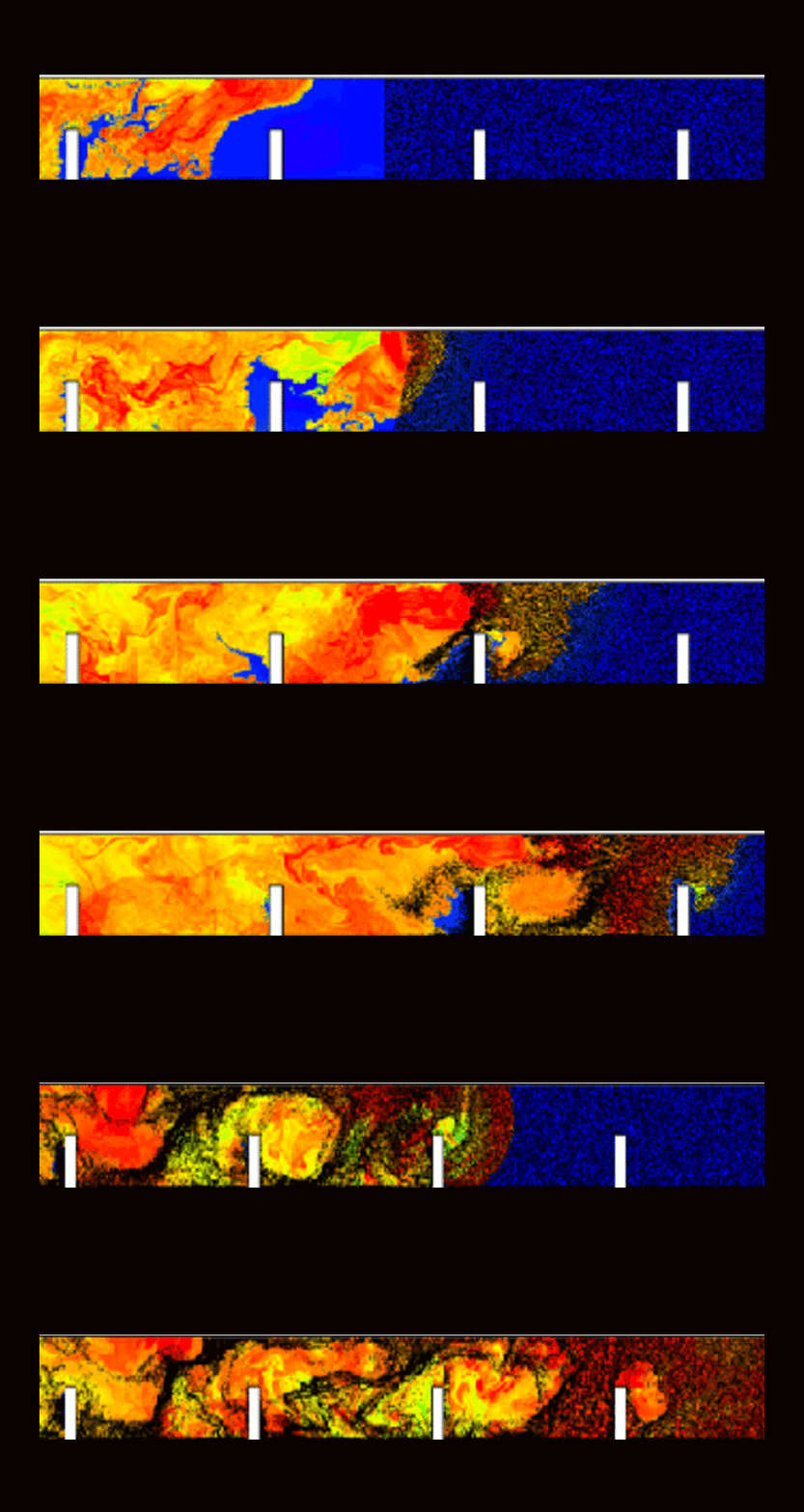
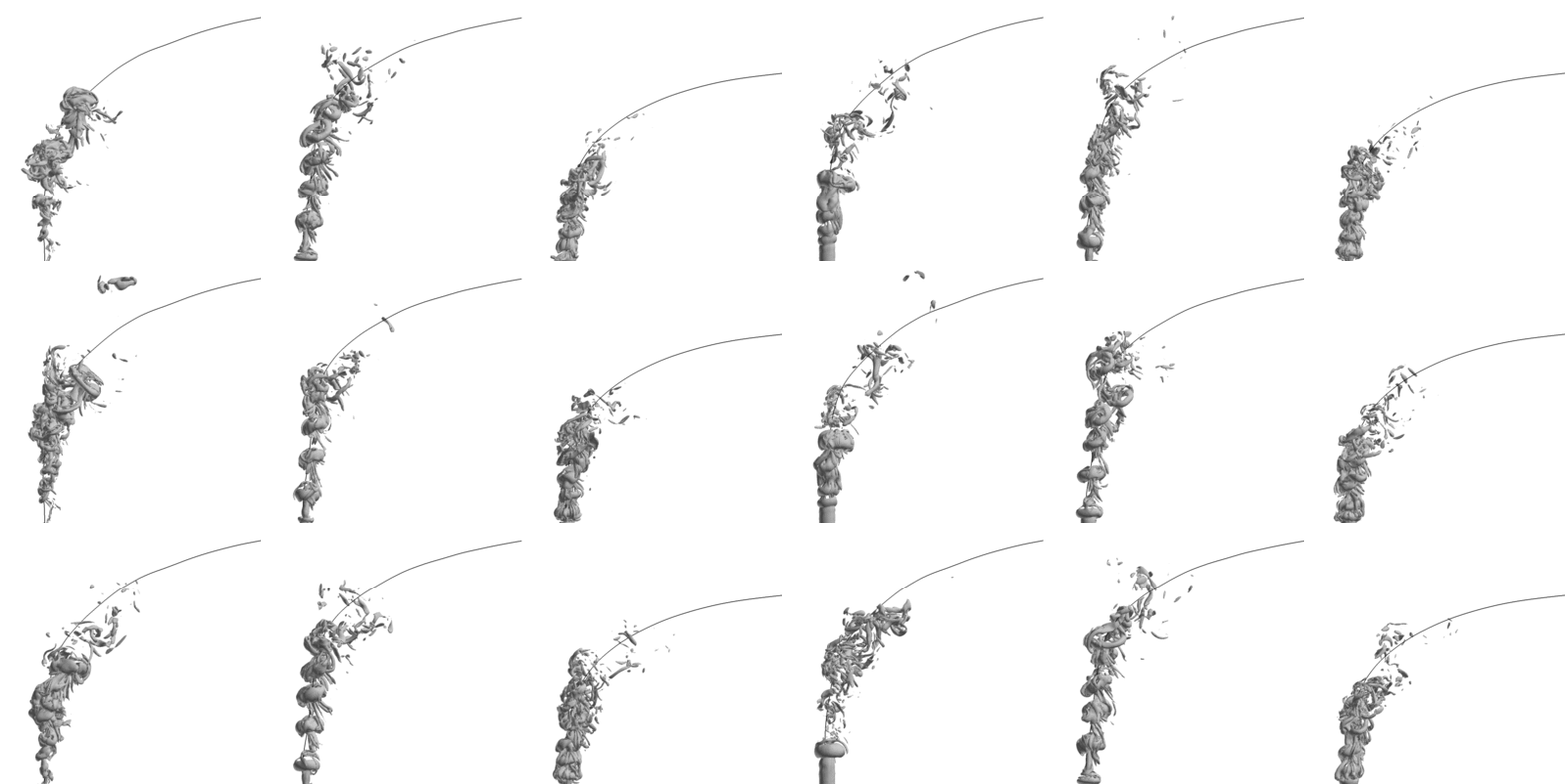
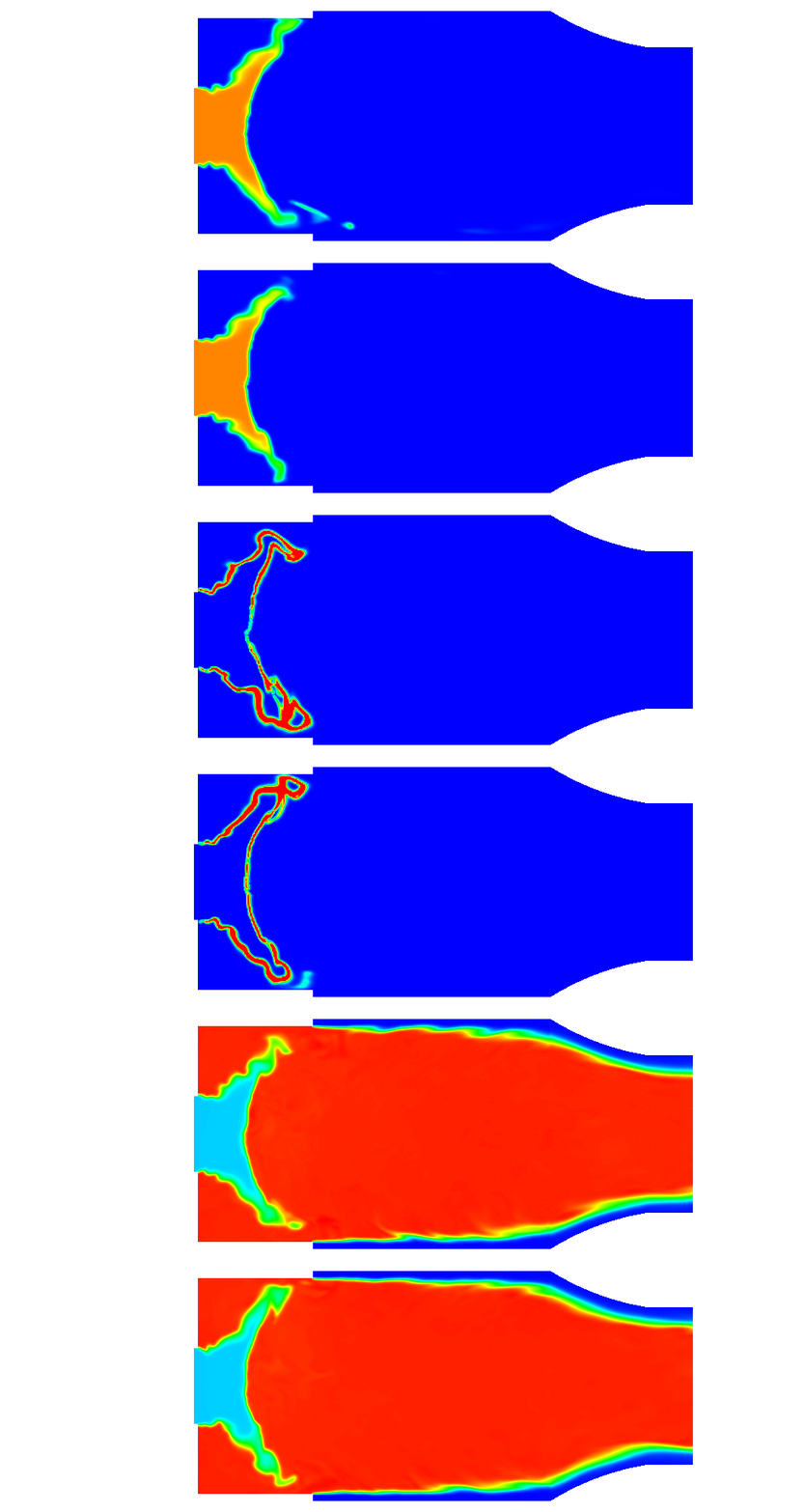
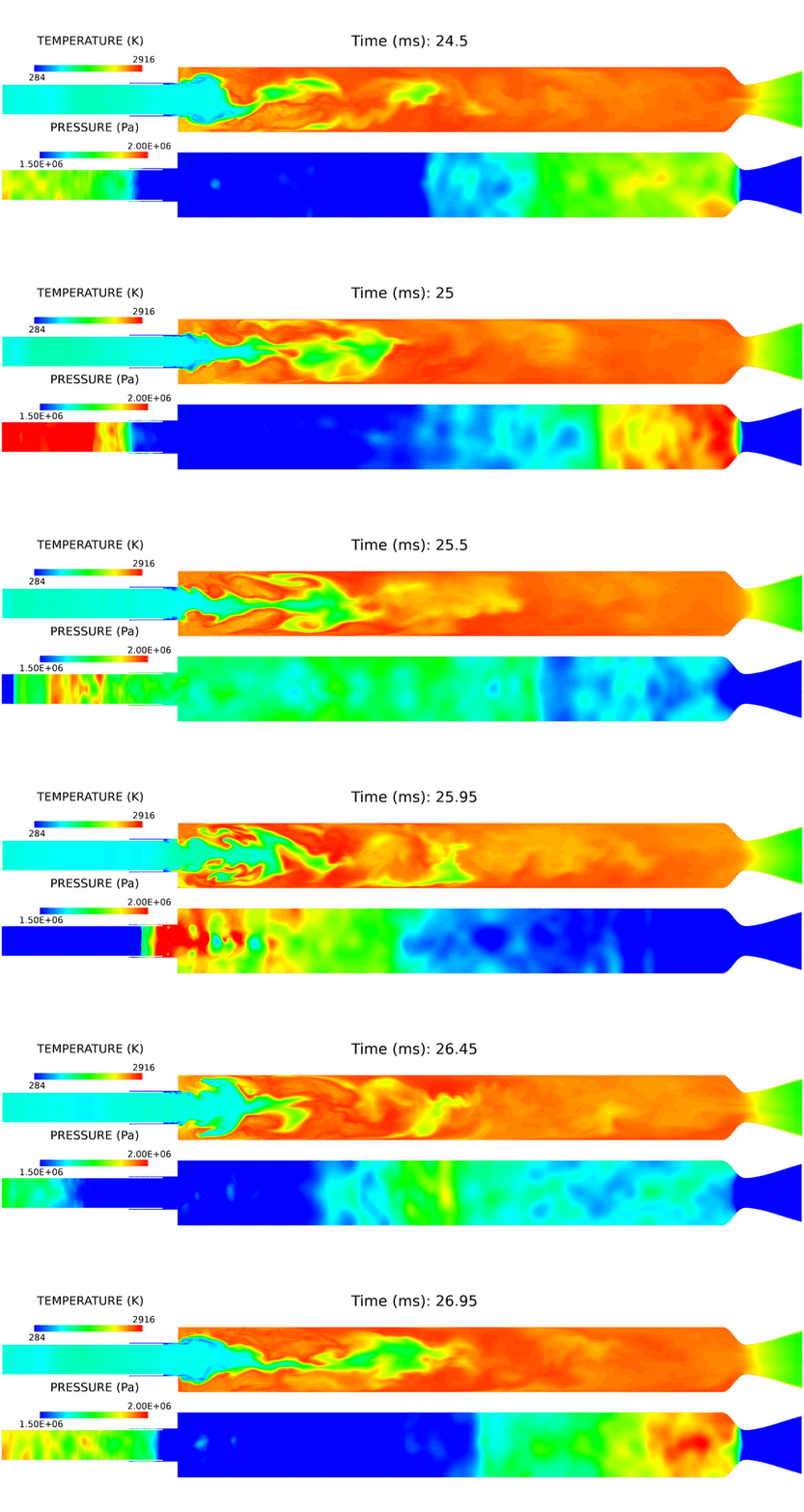
The aim of this project is to obtain a detailed understanding of combustion instabilities in a Lean-Direct Injected liquid fuel combustor. This project is being performed to present a simulation strategy based on 3-D fully compressible Large-Eddy Simulation (LES) for resolving high Reynolds number turbulent flow through the swirl vanes and the combustor. The LES approach is then combined with a subgrid mixing closure called Linear-Eddy Mixing (LEM) model in order to employ a turbulence-chemistry interaction that may happen in subgrid mixing length scales. The conjunction of LES and LEM, called the LEMLES model, is known to be regime independent and applicable to handle the partially premixed, non-premixed combustions occurring within the LDI combustor. In addition, a coupled Eulerian-Lagrangian coupling formulation is applied to calculate spray particle dynamics and the fuel-air mixing process. In this approach, individual particles are tracked within the combustor in the Lagrangian manner. Then LESLIE computes the mass, momentum, and energy exchanges between the two phases. The simulation is being performed by using a structured, multi-block grid, with constant-mass subsonic inflow and non-reflective supersonic outflow boundary conditions. The computational domain is set with an assumption of adiabatic and no-slip walls. A comparison study of predicted LDI acoustic results with experiments is being conducted. The measurement for the 3/8th - 1/2th wave plenum/chamber for several operating conditions has been made at Purdue University. Based on the preliminary simulations, the CCL computational setup has proven itself capable of reasonable prediction in both amplitude and frequencies of the system modes when compared to experimental data. Some progress is being produced in the task of gaining understanding of the flame physics and chamber acoustics.